English
 简体中文
简体中文 繁体中文
繁体中文 Русский
 Deutsch
 Bahasa Melayu
 Беларуская
 لالعربية
 日本語
日本語 한국어
한국어 Bahasa Indonesia
 Tiếng Việt
 Türkçe
 Italiano
 رسی
رسی

แม่พิมพ์กลมแบบปรับได้เป็นเครื่องมือสำคัญในงานโลหะสำหรับการสร้างเกลียวภายนอกบนชิ้นงานทรงกระบอก เครื่องมืออเนกประสงค์เหล่านี้ช่วยให้สามารถปรับความลึกของเกลียวได้อย่างแม่นยำ ทำให้เหมาะสำหรับการทำงานของเกลียวทั้งมือและเครื่อง
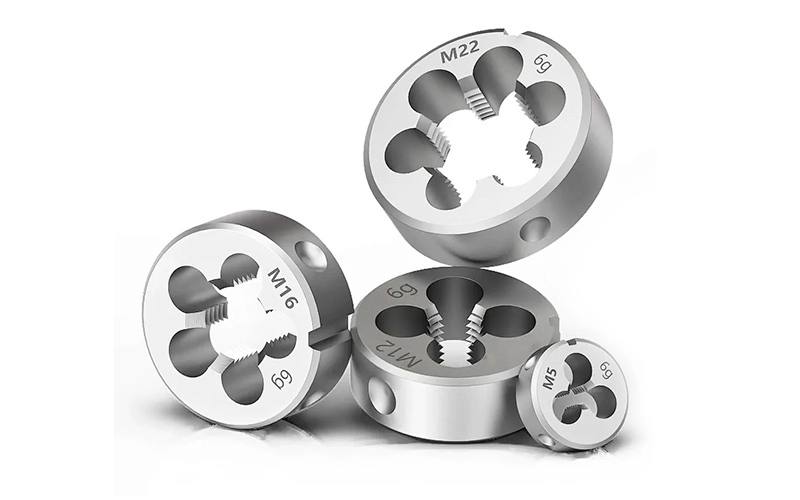
แม่พิมพ์กลมปรับได้คืออะไร?
แม่พิมพ์กลมแบบปรับได้เป็นเครื่องมือตัดทรงกระบอกที่มีคมตัดภายในที่สร้างเกลียวภายนอกเมื่อหมุนไปรอบ ๆ ชิ้นงาน พวกเขามีการออกแบบแยกด้วยสกรูปรับที่ช่วยให้ผู้ใช้สามารถปรับความลึกและเส้นผ่านศูนย์กลางของเกลียวได้อย่างละเอียด ความสามารถในการปรับนี้ทำให้มีประโยชน์อย่างยิ่งสำหรับการบรรลุความพอดีที่แม่นยำและการซ่อมแซมเกลียวที่เสียหายTechnical Specifications
- Material: Typically made from high-speed steel (HSS) or carbon steel
- Hardness: 58-60 RC (Rockwell C scale) for HSS dies
- Design: Split cylindrical design with adjusting screw
- Sizes: Available in various thread sizes including metric (M3-M48) and imperial standards
- Chamfer: 2-3 thread chamfer on front face, 1-1.5 thread chamfer on rear face
Step-by-Step Usage Instructions
1. Preparation and Safety
- Secure the workpiece firmly in a vise or holding device
- Ensure the workpiece end is properly prepared and deburred
- Wear appropriate personal protective equipment (PPE): safety glasses, gloves, and protective clothing
- Select the correct die size for your thread requirements
2. Die Adjustment
- Loosen the adjusting screw on the die to allow initial thread cutting
- For new threads, start with the die slightly open to reduce cutting resistance
- For thread repair, adjust the die to match the existing thread profile
3. Die Installation
- insert the die into a die stock or die holder
- Ensure the die is properly seated and secured in the holder
- The printed side of the die should face the operator for easy reference
4. Cutting Process
- Apply cutting oil to both the workpiece and die cutting surfaces
- Position the die perpendicular to the workpiece axis
- Rotate the die clockwise (for right-hand threads) approximately 1/2 turn
- Reverse the die counterclockwise about 1/4 turn to clear metal shavings
- Repeat this process until the desired thread depth is achieved
5. Completion and Cleanup
- Continue threading until the die has passed completely over the workpiece
- Reverse the die to remove it from the workpiece
- Clean the workpiece and die thoroughly to remove cutting oil and metal shavings
- Loosen the adjusting screw on the die for storage
Safety Precautions
- Personal Protective Equipment: Always wear safety glasses to protect against flying metal shavings. Gloves and protective clothing are also recommended.
- Proper Workholding: Ensure the workpiece is securely held to prevent movement during cutting.
- Cutting Fluid: Use appropriate cutting oil to reduce friction and extend tool life.
- Correct Speed: Maintain a steady, moderate cutting speed to avoid overheating the die.
- Direction: Always rotate the die in the correct direction (clockwise for right-hand threads).
- Chip Removal: Regularly reverse the die to clear chips and prevent clogging.
- Tool Maintenance: Keep dies clean and properly stored when not in use.
- Inspection: Regularly inspect dies for wear or damage and replace when necessary.
Best Practices
- Start with the die slightly open and adjust as needed for proper thread fit
- Use a die stock with handles for better control and leverage
- For difficult materials, make multiple passes with increasing depth
- Keep the die perpendicular to the workpiece to ensure straight threads
- Clean and lubricate the die regularly for optimal performance
- Store dies in a dry, protected environment to prevent rust and damage
Troubleshooting Common Issues
- Thread Damage: Check die alignment and ensure proper lubrication
- Difficult Cutting: Reduce cutting speed and increase lubrication
- Incorrect Thread Size: Adjust the die's setting screw and recheck measurements
Die Wear: replace worn dies or sharpen cutting edges if possible